Is your inventory ready for AI car shoppers? A 2027 dealer checklist
Check whether a buyer can find a specific car, verify its equipment and reach the right store. A practical 2027 readiness checklist for US and Canadian dealers.

Andrei MisiukevichDealer Handshake · AI-assisted preparation
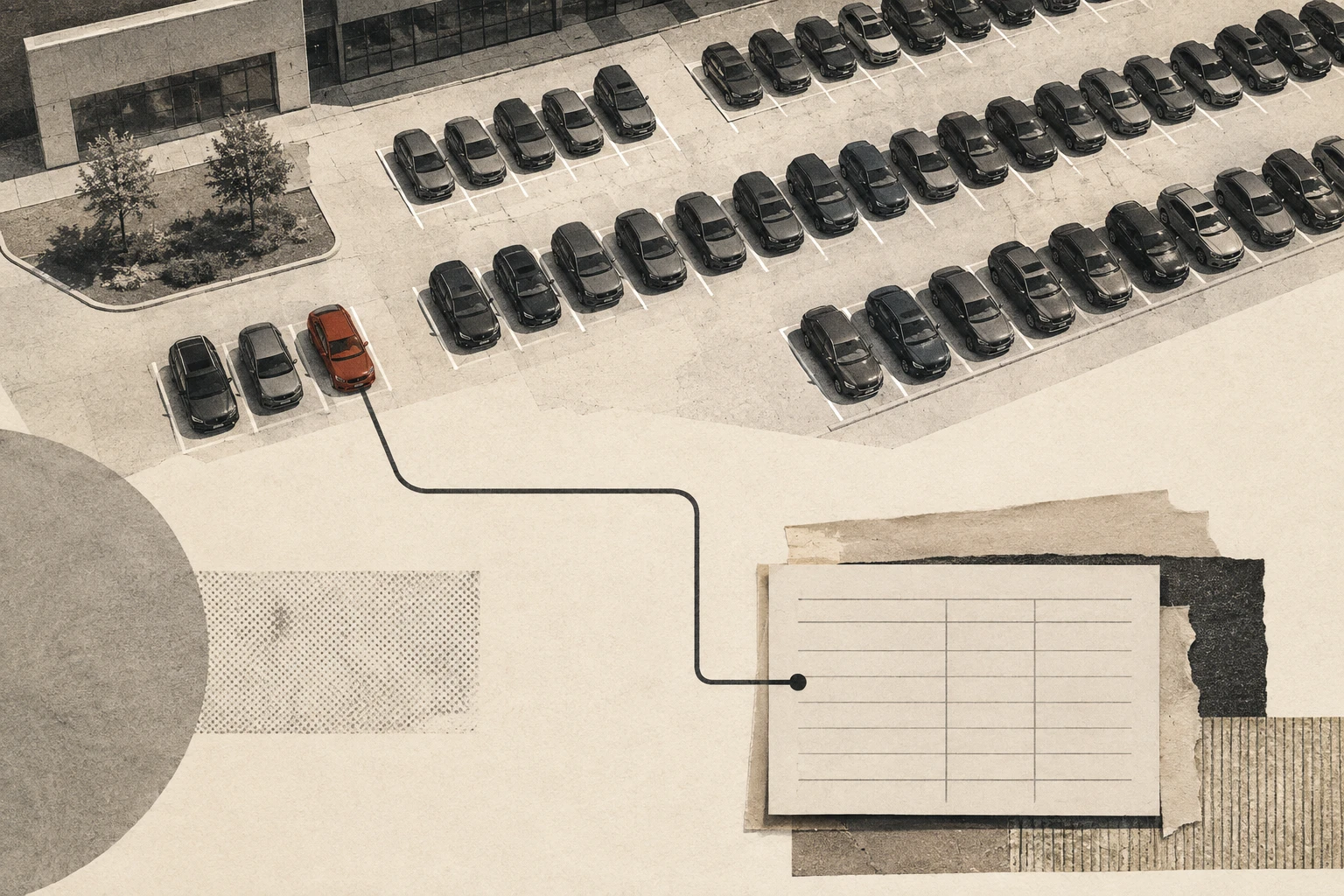
Start with a question your inventory should answer
A shopper wants a used SUV near their city, with a particular seating layout and enough room for a stroller. Your dealership has a possible match. Can the shopping experience identify that exact car, explain what is known and help the buyer contact your store?
That is a useful starting point for a 2027 plan. It gives your inventory team, website provider and sales team a shared task. Each can point to a result, a missing fact or a failed handoff.
This checklist was prepared on November 2, 2026. It describes work a dealership can do now. It does not predict how a particular AI product will rank dealerships next year.
What the research supports
In Cox Automotive’s Q2 2026 US survey, 63% of consumers planning a vehicle purchase within 12 months said they definitely or probably intended to use AI for it. The consumer sample was 1,502. This is stated intent, not a count of completed AI-assisted sales.
That makes preparation worth testing. It does not establish that a new integration will increase your store’s sales, or that the same adoption rate applies in Canada. Your own buyer activity and completed handoffs need their own measurement.
Use a worksheet your team can act on
Start with a small, deliberately varied set of vehicles. Include a new arrival, a car with an important option, a recently changed listing and a sold unit. The sold unit tests whether the experience stops offering unavailable stock.
| Check | Evidence to keep | Who can resolve a problem |
|---|---|---|
| Vehicle identity | The same VIN or stock number in your source, published listing and returned result. | Inventory manager and feed provider. |
| Availability | Source status and update time, including a sold example. | Inventory or integration owner. |
| Feature evidence | The field, document or photo supporting a requested option; unknowns remain explicit. | Merchandising team. |
| Location and units | Correct rooftop, country, currency and odometer unit. | Feed provider and website team. |
| Useful destination | A working page for the specific car, with a clear next action. | Website team. |
| Buyer handoff | Selected vehicle, intended store, buyer-approved message and delivery outcome. | BDC or sales manager. |
Keep the request, timestamp, source record and returned identifiers. A screenshot helps explain the experience; the underlying identifiers make a mismatch reproducible.
Our ten-VIN testing guide explains how to choose the sample and separate retrieval from field completeness. Ten is a manageable exercise, not a statistical benchmark.
A public-record example, with a clear limit
On November 2, 2026, a read-only search of the Car Handshake public catalog for used
SUVs in Canada returned a 2015 Chevrolet Tahoe, VIN 1GNSKCKC7FR275016,
listed by Saskatoon Auto Connection in Saskatoon, Saskatchewan. The record
identified the country as Canada and its catalog status as available at that check.
Those fields are enough to start checking identity, location and routing. They do not prove the car is still on the lot when you read this. They do not establish its condition or optional equipment, and this catalog lookup does not prove that an independent AI assistant will recommend it.
The useful next test is to open the current listing, compare its identifier with the source and ask a specific equipment question. If the car has sold, use another current example. The method survives the sale.
See rotating Canadian examples in the buyer guide or see US examples. No prices or claimed feature packages are inferred from this snapshot.
Measure discovery and contact separately
A public vehicle page, a connected inventory search and a completed inquiry are different results. Record each separately so a crawl increase does not get reported as a sales increase.
- Discovery: can a buyer or crawler reach the relevant public page, and does it contain the vehicle information?
- Retrieval: does the supported inventory connection return the expected record for the test request?
- Selection: does the shopper open a relevant vehicle or build a shortlist?
- Contact: does a buyer-approved inquiry reach the selected store with the right vehicle context?
- Outcome: did the store respond, arrange a visit and record what happened?
For a routing check, use an agreed test process with your team. Keep test inquiries out of customer-lead reporting. Never send a pretend shopper’s details into an unsuspecting store’s CRM.
Google’s guidance for its AI search features continues to emphasize accessible, helpful content and the foundations of SEO. A connection or a formatting trick cannot guarantee inclusion in an answer. Read Google’s AI search guidance.
Check Canadian rooftops on their own terms
A Canadian vehicle should keep its Canadian location, currency and odometer unit throughout the journey. A buyer starting in a Canadian guide should reach a Canadian search or listing. A familiar model name is not a reason to silently substitute a US vehicle.
For a dealer group, inspect individual rooftops. Correct data at one location does not establish that the other stores publish correctly. Car Handshake currently covers participating US dealerships and supported Canadian dealerships outside Quebec; it does not represent every store or every vehicle.
Use our Canadian dealership guide for the regional checks, and retain the source timestamps when comparing systems.
What to ask Dealer Handshake to demonstrate
Dealer Handshake connects participating dealership inventory to Car Handshake and supported AI shopping experiences. In a demonstration, ask us to use vehicles you can verify: retrieve a current car, inspect the returned facts, handle an unknown feature and show how a shopper-approved request reaches the selected dealership.
Website publication and AI-search participation have their own coverage and settings. Confirm which surfaces your dealership is enabling and how updates reach each one. A successful connection does not promise a particular search rank, recommendation frequency or number of sales.
Bring a recently changed vehicle and a sold vehicle to the conversation. Agree on what the source says, what the experience should show and who will fix any difference.
You can also run a free website visibility scan. Its result describes the website checks it performs; it is not a forecast of leads or a complete test of every assistant.
Publication notes
By Andrei Misiukevich, Dealer Handshake. Prepared with AI assistance. The worksheet is an operational recommendation, not an industry certification. The catalog example is a dated public observation; no customer sales lift or hands-on vehicle inspection is claimed.
Research and product references were checked on November 2, 2026. Report a correction to support@dealerhandshake.com.